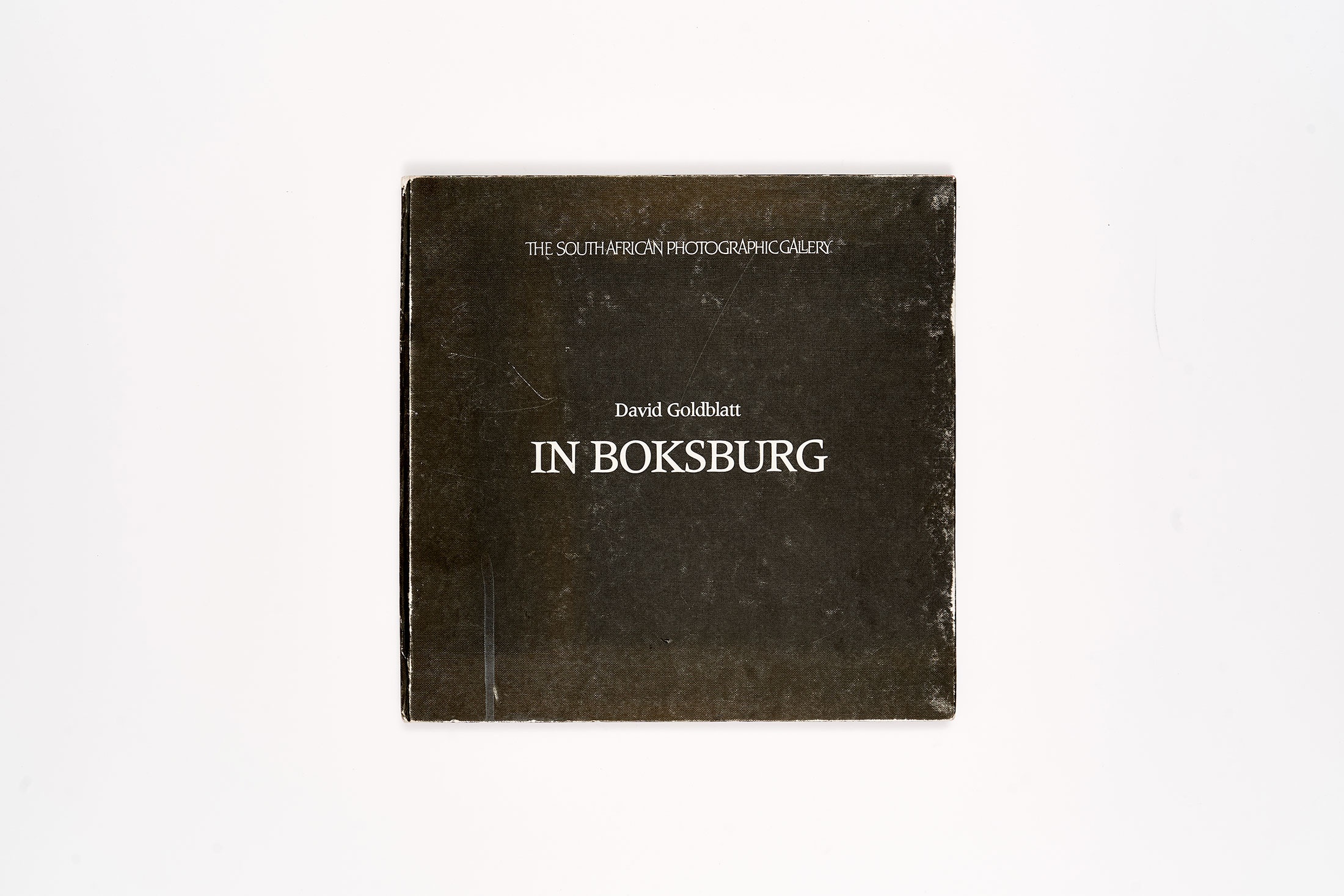
“[A] few years ago I felt the need to explore something of my own background in the life and values of middle-class, white, urban society. I had earlier done work in this direction in Hillbrow and the northern suburbs of Johannesburg. But I wished now to go to a smaller place: Randfontein and what I remembered of more than thirty years there, were really at the heart of my new quest. Randfontein though, was still too painfully close to photograph with the intimacy and dispassion I sought… I began to look at the towns of the East Rand and was increasingly excited by what I found. Benoni, Brakpan and Boksburg particularly drew me… Boksburg held me… Like Randfontein, only more so, it was nondescript and elusive, yet strongly drawn and pungent. “From the unexpected softness of its man-made lake, to the tight circumscription of its pre-cast concrete walls, Boksburg is shaped by white dreams and white proprieties.” (David Goldblatt, 1982, In Boksburg, p. 8.) This is David Goldblatt’s fourth photobook. It features 75 black-and-white photos describing the residents of Boksburg, a town near Johannesburg, during the final decade of apartheid. Started in 1979 and completed a year later, it ventures from the streets into the interiors of middle-class white families. Most of its townspeople pursue the family, social and civic concerns of respectable burghers anywhere, while locked into a deep and portentous fixity of self-elected, legislated whiteness.”
デイヴィッド・ゴールドブラット
ボクスブルグにて
ケープタウン、ギャラリー・プレス、1982年
84ページ
「数年前、私は中産階級の白人都市社会の生活と価値観に、自身の背景を重ねて探る必要を感じていた。これまでもヒルブロウやヨハネスブルグ北部郊外で同様の試みを行ってきたが、今はより小さな場所へ向かいたいと考えていた。ランドフォンテインは、30年以上にわたる記憶とともに、この新たな探求の中心にあった。
しかしランドフォンテインは、私にはまだ近すぎた。求めていた親密さと客観性をもって捉えるには、あまりにも切実だった。やがてイースト・ランドの町々へと目を向けるようになる。ベノニ、ブラックパン、そしてとりわけボクスブルグに強く惹かれていった。
ボクスブルグは私を引き留めた。ランドフォンテインに似て、しかしそれ以上に、特定しがたく捉えどころのない場所でありながら、明確な輪郭を持ち、強い印象を放っていた。人工の湖の思いがけない柔らかさから、プレキャスト・コンクリートの壁による厳密な囲い込みに至るまで、この町は白人の夢と規範によって形づくられている。」(デヴィッド・ゴールドブラット、1982年、『ボクスブルグにて 』、8ページ)
本書はデヴィッド・ゴールドブラットによる4冊目の写真集である。ヨハネスブルグ近郊の町ボクスブルグに暮らす人々を、アパルトヘイト末期において捉えた75点のモノクロ写真を収録している。1979年に制作が始まり、翌年に完成した本作は、街路から中産階級の白人家庭の室内へと視線を移していく。そこに暮らす人々の多くは、家族や社会、市民としての関心に従って日常を営んでいる。しかし同時に、自ら選び、制度によって不穏なまでに固定された白人性の内部に深く組み込まれている。