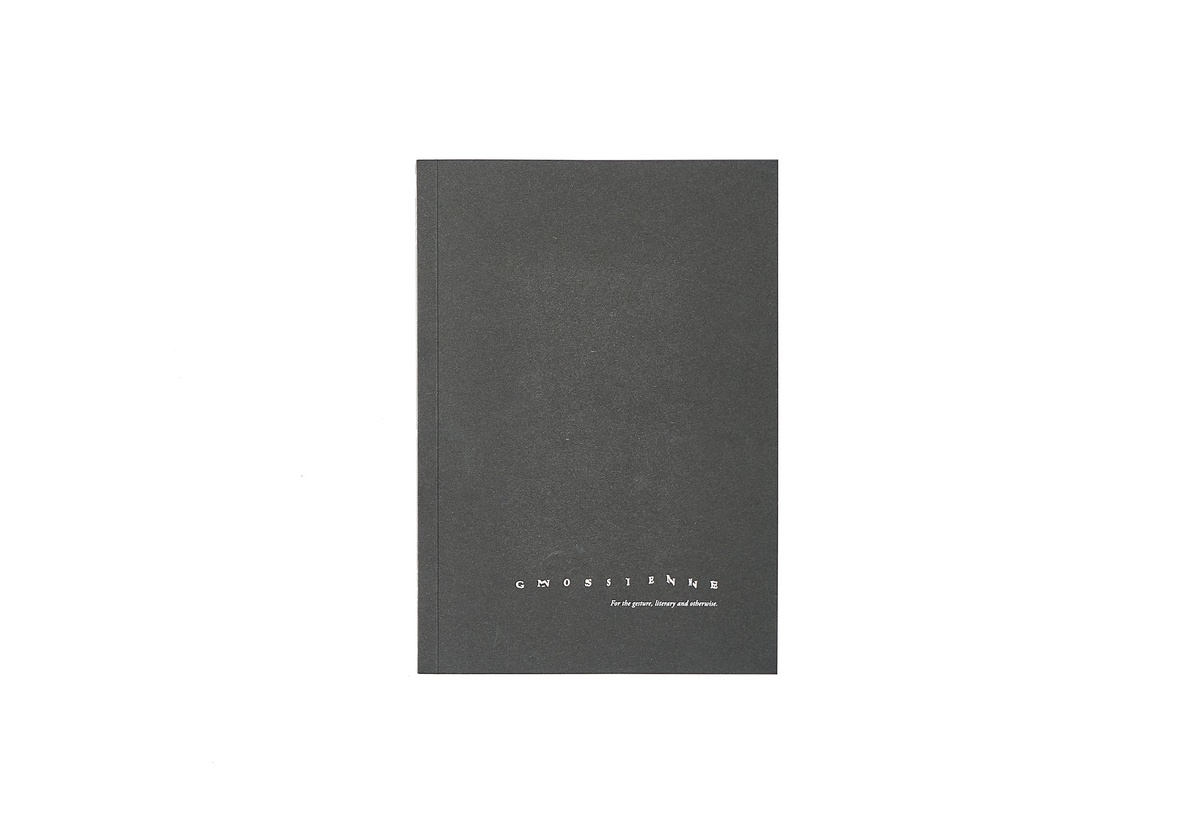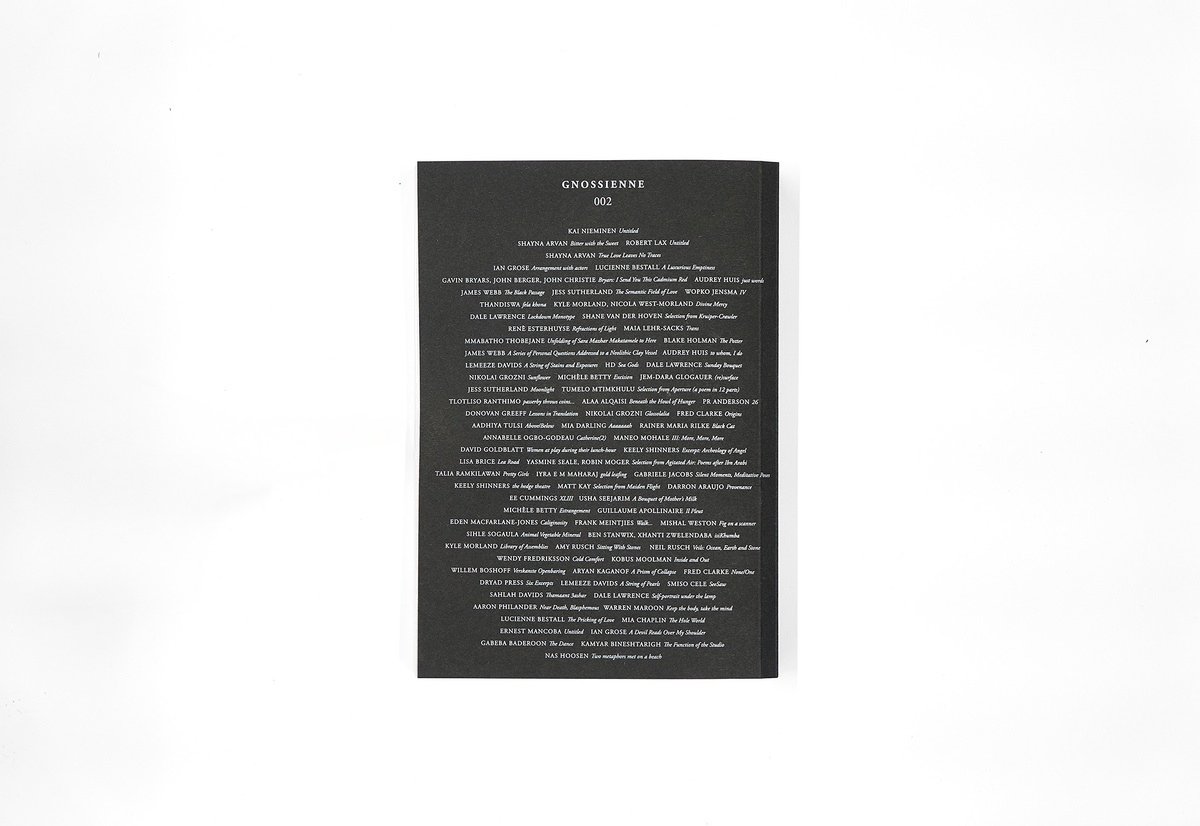
J.S. Whenever I feel lost, I return to the name. It works as a reminder about the motivations of this project. The Gnossiennes are musical compositions by Erik Satie. They have no formal structure, they’re in free time, and they’re largely experimental. Those three characteristics have been so generative.
I’d known for a long while that I wanted to work in publishing, but I didn’t know any writers. Gnossienne – the journal – began as a way of practicing the act of platforming in print the writers I am hoping to work with one day when Gnossienne becomes a fully fledged press. It was a tangible way to establish those relationships but it was also a tangible way to practice the craft of typesetting, design, binding, and printing – which I did, all on my home printer. The whole thing is very DIY, and maybe a bit pathologically self-sufficient, but it is my personal practice. It was also a way of opening up my practice in a way that extended outward, toward community. It became something less self-serving and more in-service-of, and that has been very generative.
The main catalyst was reading an interview with Susan Sontag in The Paris Review, where she was asked: “When did you start writing?” Her response, instead, was to remember when she began publishing, aged nine. Sontag made little books from newspaper articles, poems, and other pieces of writing, collaging and compiling what she found and selling these to friends and family. I adopted her gesture as an initial prompt and began working on Gnossienne on New Year's Day. By January 8, I had planned out the whole zine with a list of thirty potential contributors, but I was stalling. I pushed myself to email the person on my list who I was most nervous to reach out to: Keely Shinners. She responded in about five minutes. To me, that was wild. That was the fuel I needed. I began to understand the power of just asking.
K.M. People love to be asked.
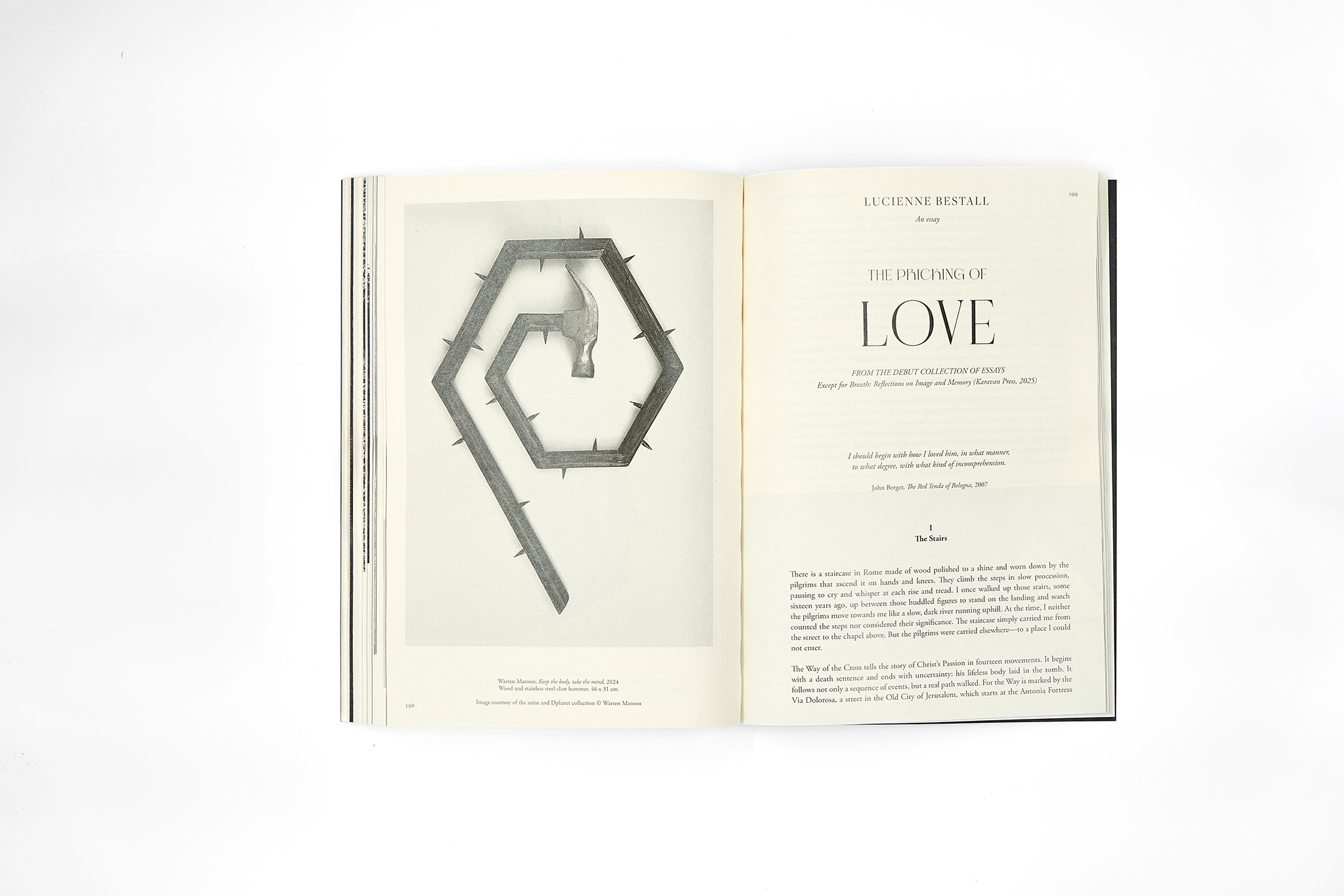
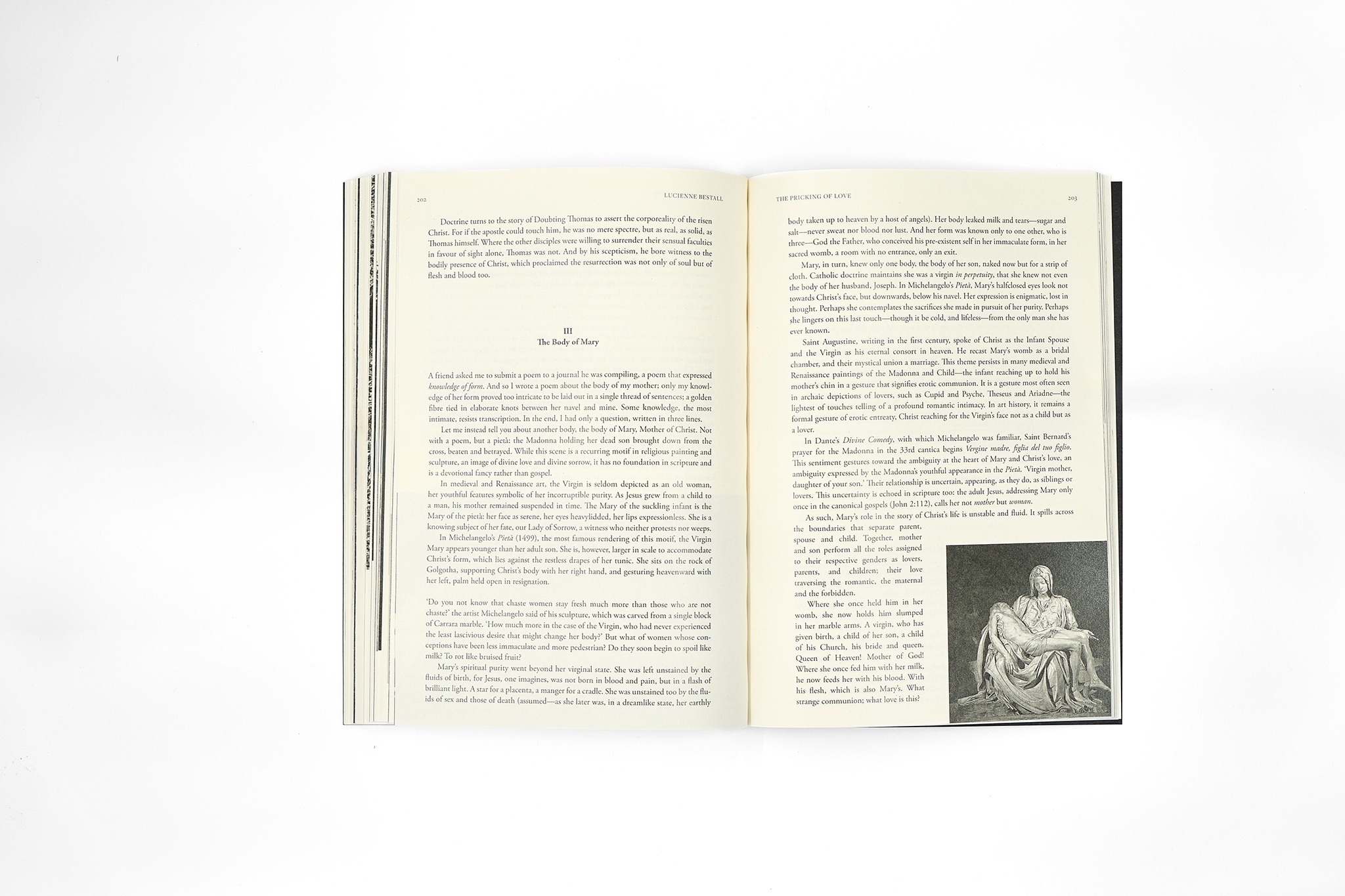
J.S. Not one person said “no”. I was so inspired by that willingness. And so I sat with all of this writing. Each text became a provocation to think about its form. How do I set it on the page? How do I build an environment for it? I see editorship as a gesture of housing. Ultimately, I see the journal as a place to house the gesture, both literary and otherwise. I also like the idea of the physical printed object having a stable external format that is recognisable, alongside a variable internal space, that can shift and change in response to each of these gestures.
I have thought about changing the name because Gnossienne is perhaps too long-winded and obscure. The other name I had in mind was Volta, referring to the poetic device. In a sonnet, the first fourteen lines will say one thing and in the last two lines, there’s a dramatic turn. Or in West African poetry, where an initial speaker says something, a second speaker may express a contradictory idea following on from this. Call and response. As you piece together the poem’s meaning, you experience these continuous mental shifts.
J.S. I decided against the name change but this idea has been useful to me as I practice exercising a curatorial and/or editorial will. I think about the idea of the volta all of the time – as I’m conceiving future issues, but also within each issue as I sequence the works. After every two or three pieces, there is a turn.
But also, I’m figuring it out. I’m continuing to fall into it rather than stepping out into the world and announcing, “This is now a literature and arts publication.” I think that role comes with expectation and precedent.
K.M. You began this project with the intention of fulfilling a need for yourself, but it entered the world as you reached out to contributors and then published and distributed it. Do you have a perception of who your audience is, or who you hope it will be?
J.S. I guess there is always the assumption that there are people out there who are just like you. It’s a belief that is rooted in faith – you just have to believe it. I think that people can look at this publication and understand that there is ‘time’ here. It is a D.I.Y., kind of unserious thing but it also takes considerable effort. It is loose and undefined but the text is beautiful, there’s pagination, the footnotes are perfect, and it has been copy-edited to within an inch of its life. I think I believe that there are people out there who will appreciate that, but I don’t yet know who they are.
K.M. The proof is in the thing. Sean O’Toole and I were talking about the end of the literary journal Prufrock, and the article that one of the editors – Nick Mulgrew – wrote. He said that the writers sending submissions far outnumbered the people actually buying the journal. You showed me the ‘letters from the editor’ in old issues of Staffrider and Snarl among A4 Library’s ephemera collection and I can’t stop thinking about them. There is this stream of apologies to the readers: “Sorry this issue is late” and “Sorry the price is going up, we can’t help it”. It suggests a demanding and vocal audience, and a sense of duty or responsibility on the part of the editor. Does that environment still exist?
J.S. I would imagine that it does. But I think you can choose which of these demands to respond to. No one is going to die if it's not published on time.
K.M. You were gathering reference images of artworks in a digital folder which you shared with me in preparation for this process. Looking at the images printed and accumulated here, they feel transformed.
J.S. I have nothing against digital, but I love print. I have been thinking about social media and how it feels nonconsensual. You’re taking in all of these things that you never asked for – not even the nice things. With print, you have to give something of yourself in order to get something back. I love the prospect of being able to create that experience for others. And printed matter feels like a reprieve from the tinny feeling of scrolling.
K.M. It’s also about selection and a sense of limitation. I think there is an underlying fear that you could keep scrolling into infinity. In the lead up to the first issue, did the process of collaborating with the writers and artists happen solely online, or were they a part of the transition of the material from digital to print?
J.S. Conversations began over email or Instagram and then continued offline. The synchronicity that started to appear out of that intimacy and physicality was life-altering. It is something that I will always work to keep at the centre.
While I’ve been in A4 Library there hasn’t been a sense of anxiety, but when I started printing and pinning up these excerpts the anxiety started to creep back in. I think it comes from encountering the scale of the history of independent publications through A4’s Library: the amount of information, and the number of people who have tried and done this before. There are so many voices and approaches.
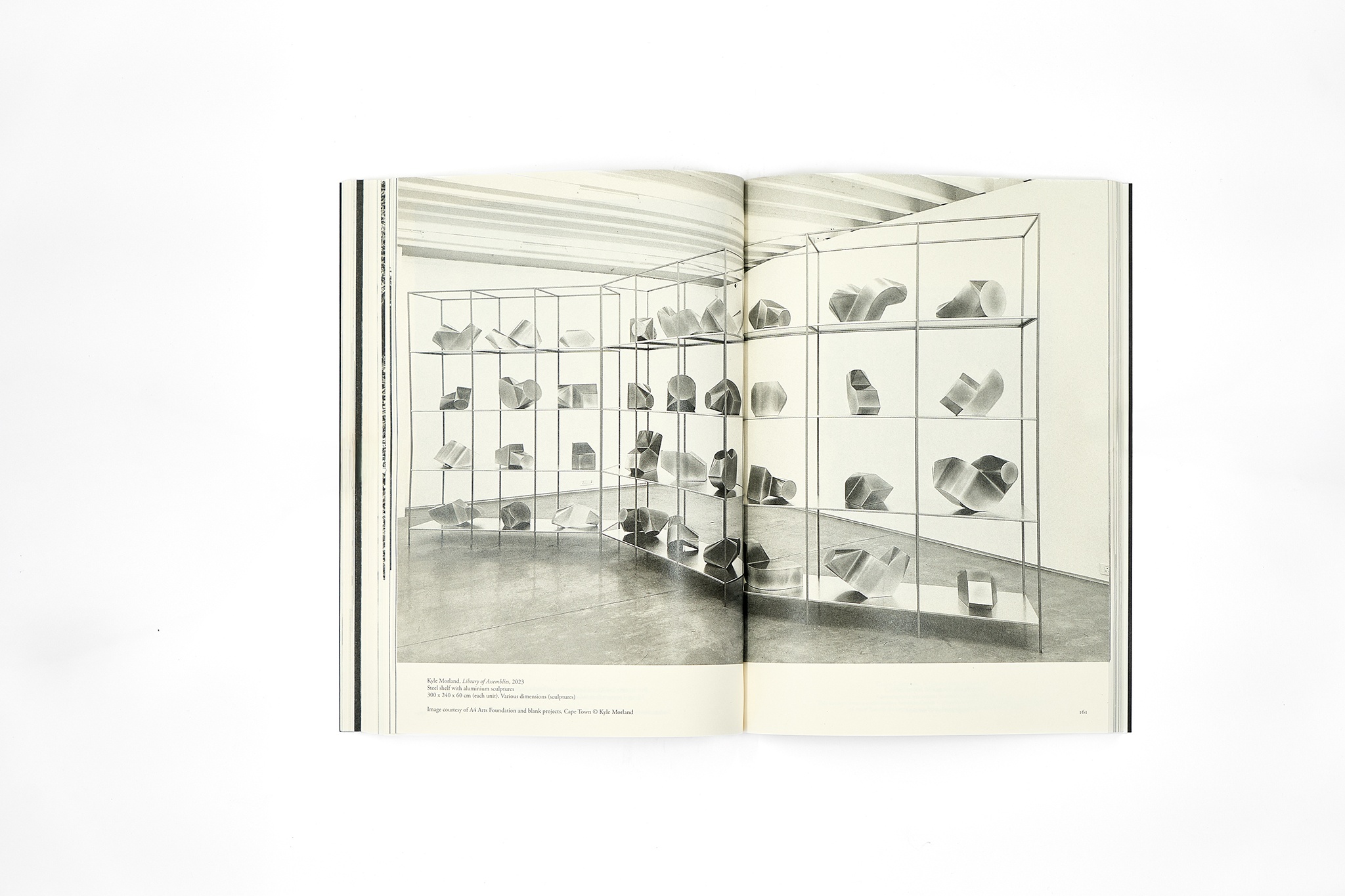
K.M. It is something that the Library Residency team discussed before you began this process. We love the zine and we love that you’re making it, even if we didn’t have a fixed outcome in mind. And the act of you being here and processing this material in your meandering, spontaneous way has given us an opportunity to look through the Library’s collection of zines and independently published journals.
I often return to Derrida’s writing on ‘archive fever’ – the idea that the archive can become this never-ending, bottomless void that we risk throwing ourselves into. Seeing and acknowledging that this is our natural impulse, I’ve become more accepting about the limitations of the process. You can’t capture the entire universe.
J.S. Yeah! Mindy Seu says something like, ‘you can’t screenshot everything.’