Introduction
Internationally, the 1990s saw the dominance of dematerialisation in art through conceptual, installation, performance, and participatory art. In addition to the spontaneity of their processes, FIG and FLAT’s highlighting of these forms of contemporary practice is part of what differentiated them from the more traditional art spaces in South Africa at the time. These forms entail specificity of time, space, and place, making our reading of them through ephemera limited. These limitations are furthered by a lack of material archived by project spaces as their structures often emphasise ephemerality and engaging with the present moment over a future legacy. Even so, the work of experimental practitioners lies at the core of project spaces and their reasons for being. Exploring their aesthetic choices tells us more about the nature of these collaborations, their audiences, and South African art history. I have written about the early wave of conceptual practice in South Africa through FIG and FLAT in the first of this four-part essay. I will use this final instalment to show how practitioners attempted to support a resurgence of dematerialised, commercially resistant, and experimental art in the 2000s up to the present day. This resurgence was in response to the professionalisation of the art world, driven by the success of commercial galleries in the region, which some feel has constricted the open-ended, ‘avant-garde’ manner of art-making that the art world expects of emerging practitioners.
Subverting expectations
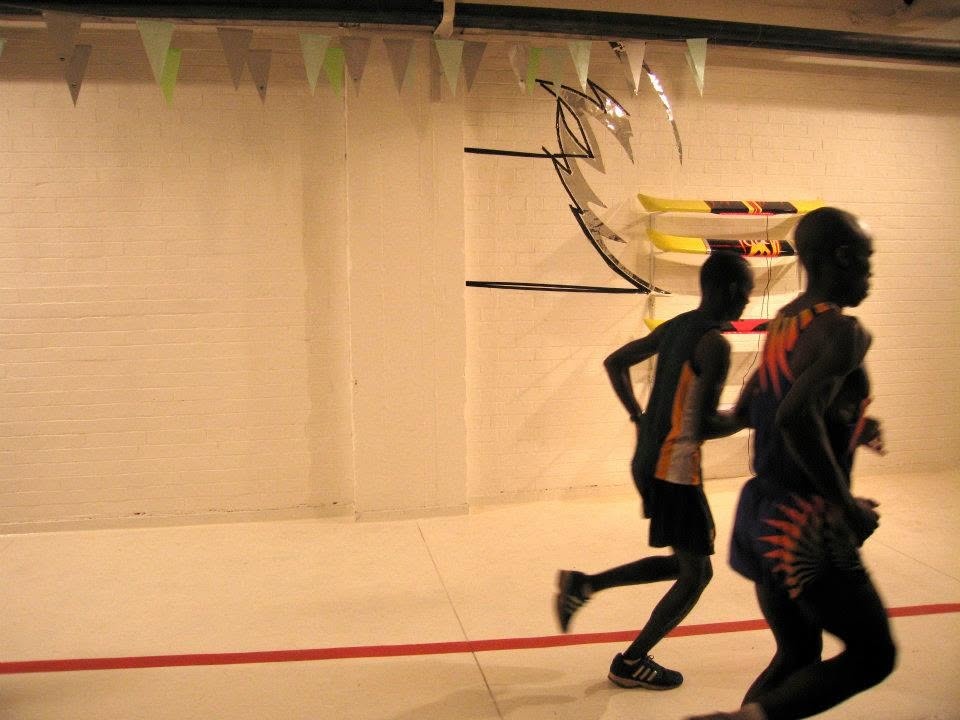
One of the primary ways in which project spaces show themselves to be places for experimentation is by subverting the expectations of their audiences. These moments of genuine surprise often become touchstones of the project’s character. Parking Gallery, founded by Simon Gush in 2006, described itself as “a malleable artist-run project initiated to create an alternative platform for contemporary art in Johannesburg”. It had an initial run of six months, set in a storeroom in the parking garage of the apartment complex where Gush lived at the time. Gush relaunched the project between 2012 and 2014 in the offices of the Visual Arts Network of Southern Africa (VANSA) in the King Kong Jozi building (a hub for creative studios), with a more institutional sensibility. Through my research – online and in conversations with people who were working in the art world at the time – one of its most memorable exhibitions was Dorothee Kreutzfeldt’s Adversary (2006). Kreutzfeldt, known for her paintings and academic work, produced an installation of LED lights, decals, and floor painting activated by four runners who ran back and forth through the small space. In the time since Parking Gallery’s first iteration, its revival, and the present moment, Kreutzfeldt’s exhibition has lived on in anecdotes about the space, the banner image of the project’s inactive Facebook page, and in a journal essay about artist initiatives and the history of the Parking Gallery by artist/academic Robyn Cook.1 Though signs of the critical reception of the exhibition at the time are scarce, she cites its now-defunct listing in ArtThrob – “The exhibition includes painting, an installation and, believe it or not, 'local middle distance runners'”2 – demonstrating the unexpectedness of the performance. Cook was also a project space organiser, having co-founded the Sober & Lonely Institute for Contemporary Art in 2011. The project was known for its rapid-fire residencies with experimental artists, based in a house that they were asked to care for during its two-year-long renovations.3
An aesthetic element which contributed to YOUNG BLACKMAN’s reputation of being non-commercial and ‘punk’ was their lack of preciousness – sometimes full disregard – for their physical space. For the June 2010 exhibition, Kendell Geers reenacted a 1993 work titled Title Withheld, throwing bricks through the gallery’s large window. Blackman said of the conceptual gesture, “We had several issues with the landlord after that.” The work also created controversy amongst the clientele at the Kimberley Hotel across the street –
A lot of people would say, “This isn’t art, it’s rubbish”, and I’d say more people have probably looked at those broken windows than have looked at most artworks in South Africa. Many people who were walking by at night would stop and look in. Many of them must have thought “that must mean something... this must be meaningful in some way.” It may have gotten a lot of people angry, but a lot of people engaged with it.4
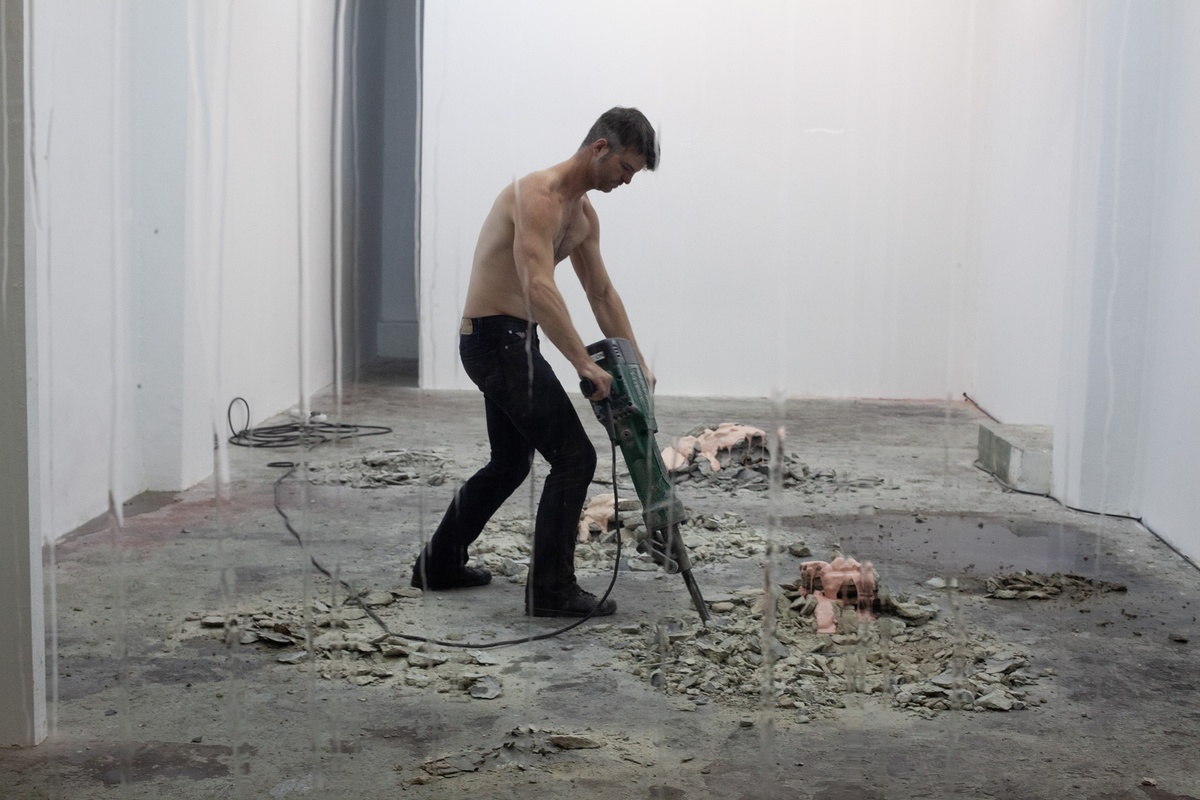
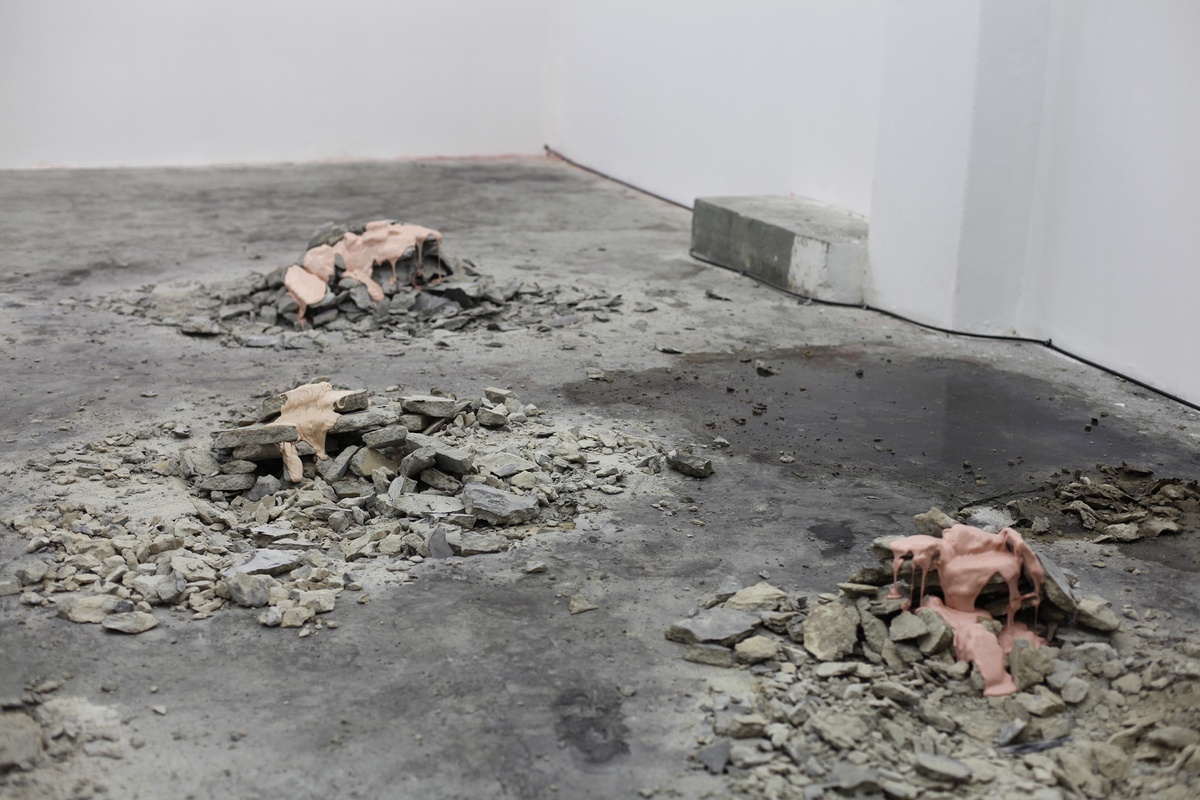
Further pushing the limits of their space (and fuelling their conflict with the landlord), their last exhibition was a collaborative performance installation by Stuart Bird, Belinda Blignaut, and Linda Stupart titled VEX AND SIOLENCE (2010). Bird jackhammered into the concrete floor followed by Blignaut, who poured molten pots of bubblegum over the craters. The performance-installation was viewed from the street through the windows, which Stupart made ‘weep’ with trickles of water. Beyond augmenting YOUNG BLACKMAN’s reputation for reckless destruction, the exhibition presented an intense physicality – the vibrations of the machinery through Bird’s body, and Blignaut’s flesh-pink, growth-like mounds of the bubblegum traverse the lines of human and object and speaks to abjection, a driver of feminist and queer body art.
Creating an atmosphere
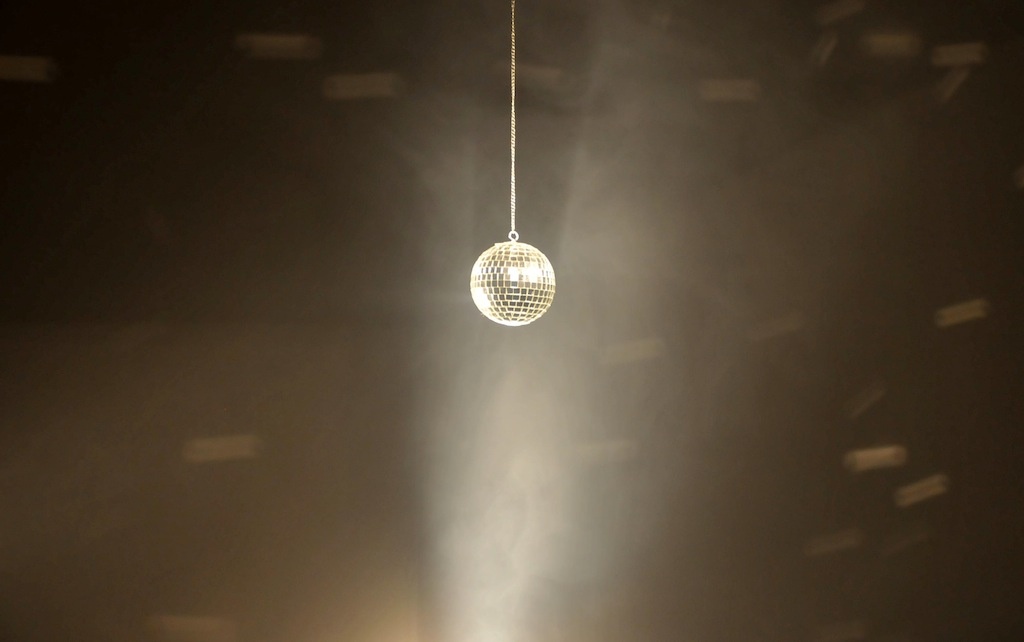
In YOUNG BLACKMAN’s efforts to revive the experimental, conceptual practice of the ‘90s, they focused on solo shows (with the exception of the collaborative installation by Bird, Blignaut, and Stupart). This strategy allowed exhibiting artists to create a total environment rather than discrete objects, further distancing the projects from commercial gallery shows. For example, Jonathan Garnham’s installation, The Winter of My Discothèque (2010), used a single object – a disco ball – to create an immersive atmosphere. This work references the ‘Cathedral of Light’ by Albert Speer, a German architect who created much of the visual language of Nazi rallies. A smoke machine and four spotlights complete the installation, simultaneously invoking both ‘90s Berlin club culture and Germany’s dark history of fascism.
Looking to Under Projects, there was some criticism of their repeated use of an open-call format for creating shows that relied on a multiplicity of objects, with some suggesting that they were too similar to the group exhibitions at commercial galleries or ‘not conceptual enough’. While I agree that Under’s shows were unlike many of their South African predecessors, they did engage with the similarly noncommercial genre of socially engaged practice (I will expand upon this further later in the essay). However, in some ways, Guy Simpson’s Just Visiting was an ‘exception rather than the rule’ in the context of Under’s programme, presenting a more visible balance between artistic collaboration and a singular, cohesive idea. Known at the time for his depictions of other artists’ work within gallery spaces, Simpson took the idea to an ambitious end by painting a domestic setting within Under and inviting artists to contribute to the ‘decoration’ of this home by painting images of their past works onto the walls. In addition to supporting their mission to strengthen a sense of community in the art world, the show subverted contemporary art’s rejection of the domestic sphere as exhibition space in preference for the ‘white cube’. Though many of the artists included in the installation have gallery representation and reproduced works which had been exhibited in a commercial context, the act of painting them as murals, which were whitewashed at the end of the exhibition, made them ephemeral, undercutting their value as marketable objects.
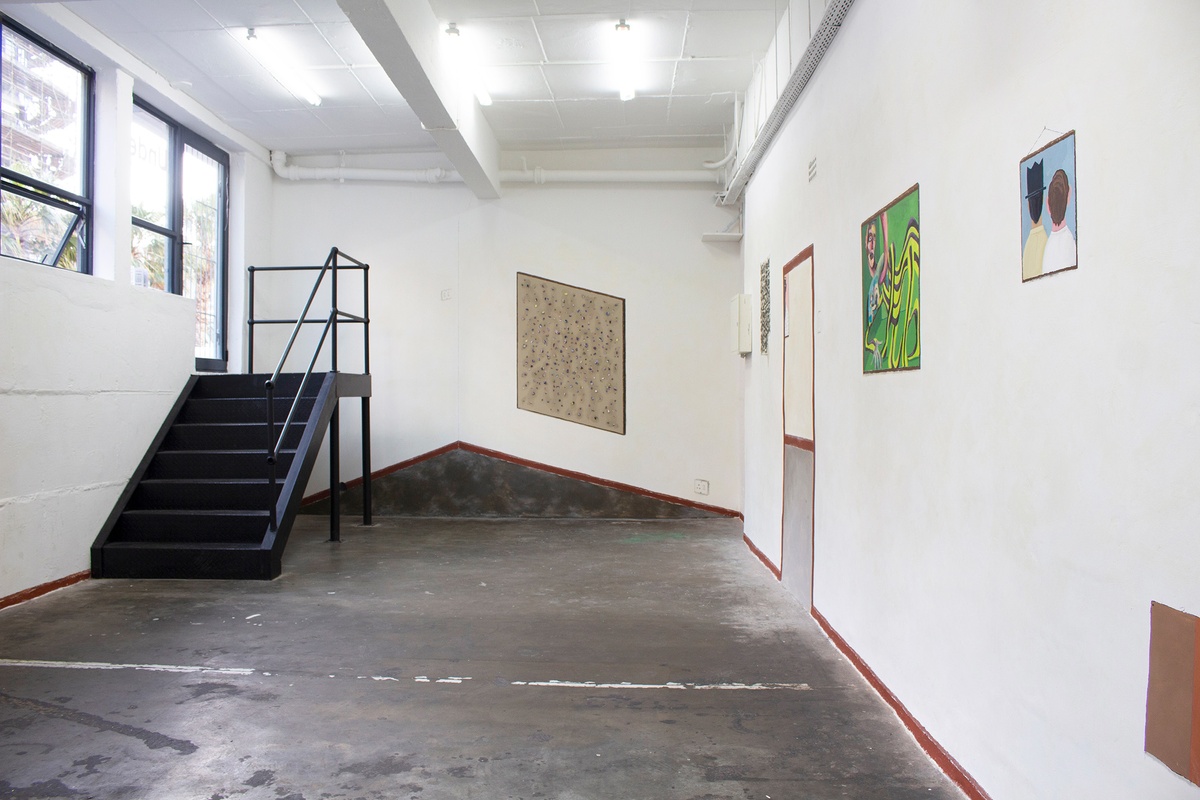
POOL has shown itself to be adept at facilitating installations and programmes which feel immersive and encourage the full engagement of audiences. For example, in Abri de Swart’s exhibition Ridder Thirst (May/June 2018), the glowing red light of a neon “Adult World” sign (the name of a ubiquitous, seedy South African sex shop) enveloped the space and its visitors. The programme during this exhibition was extensive and included a film screening and discussion, a 45-minute performance titled Words Beneath Bridges, a listening session of a collaborative album, and a walkabout. Similarly, their series of projects titled Holding Water (2019) involved practitioners in varying disciplines collaborating to produce installations which simulated the sensation of being submerged in water. The series was supported by the Oceanic Humanities for the Global South, part of the Wits Institute for Social and Economic Research (WISER). It included Nolan Oswald Dennis’ the ground, and other wet things, a sound and image installation which included poetry and music by Robin Scher and DORMANTYOUTH, as well as Zayaan Khan’s workshop Thinking the Sea as Practice. Khan invited participants to make “kelp tools and instruments” and to use “seawater as brine for fermentation”. This was a continuation of her earlier Fermentation Workshop at POOL, during which participants were guided through “the practicalities of fermentation for food, soil health, medicine, and even for dyeing”. The project included an intimate meal of fermented vegetarian dishes.
Connecting with audiences
In the 2000s, there was an increasing focus on socially engaged and community-focused art, due in part to the popularity of Nicolas Bourriaud’s Relational Aesthetics (1998) in academia. One of the most iconic instances of participatory artistic practice occurred in 1972. Gordon Matta-Clark created a New York diner/artwork titled FOOD5, in collaboration with Caroline Goodden, Laurie Anderson, Tina Girouard, Suzanne Harris, Jene Highstein, Bernard Kirschenbaum and Richard Landry. They would later work as a collective under the name Anarchitecture. The intention was to create a business which was also a project space and a piece of conceptual art, crossing the boundaries of ‘aesthetic disinterestedness’. This is the idea that any pleasure derived from an artwork should be ‘pure’, stimulated by the formal qualities of the work itself rather than ‘sensual pleasures’ such as the satisfaction of eating a good meal, or the potential financial value of the work.6 The restaurant offered valuable part-time jobs to artists, a financially precarious community. More established artists were invited to prepare their specialities as guest chefs, including Robert Rauschenberg, who was rumoured to serve his homemade chilli to guests. The restaurant failed to make a profit but became hugely influential as an artwork – Barend de Wet was likely aware of the work when he performed Art disguised as pasta at FIG, as was Rirkrit Taravanija, who served pad thai to visitors in untitled 1990 (pad thai)7 in the project space of Paula Allen Gallery, New York. This socially engaged art is considered a stream of conceptual practice.
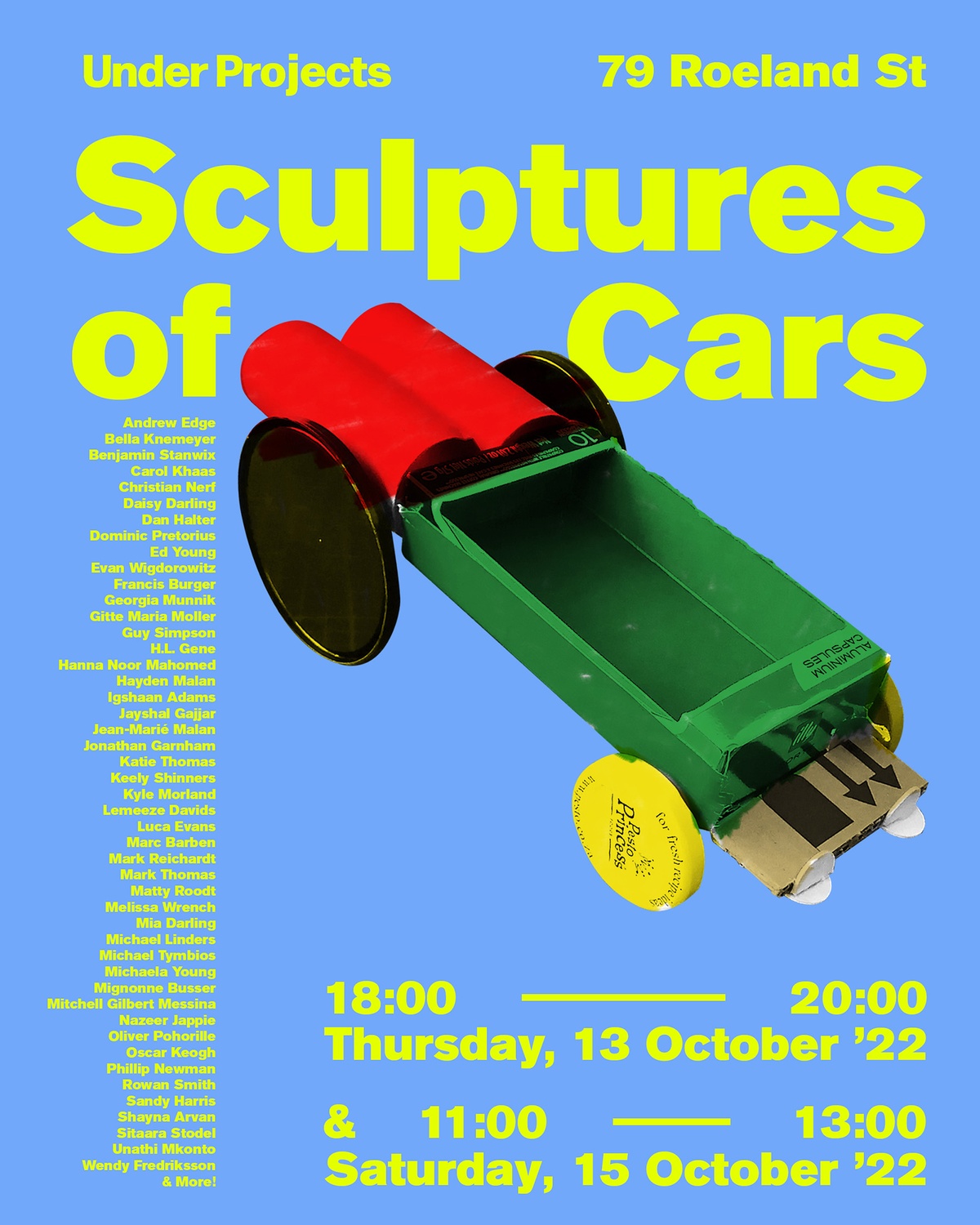
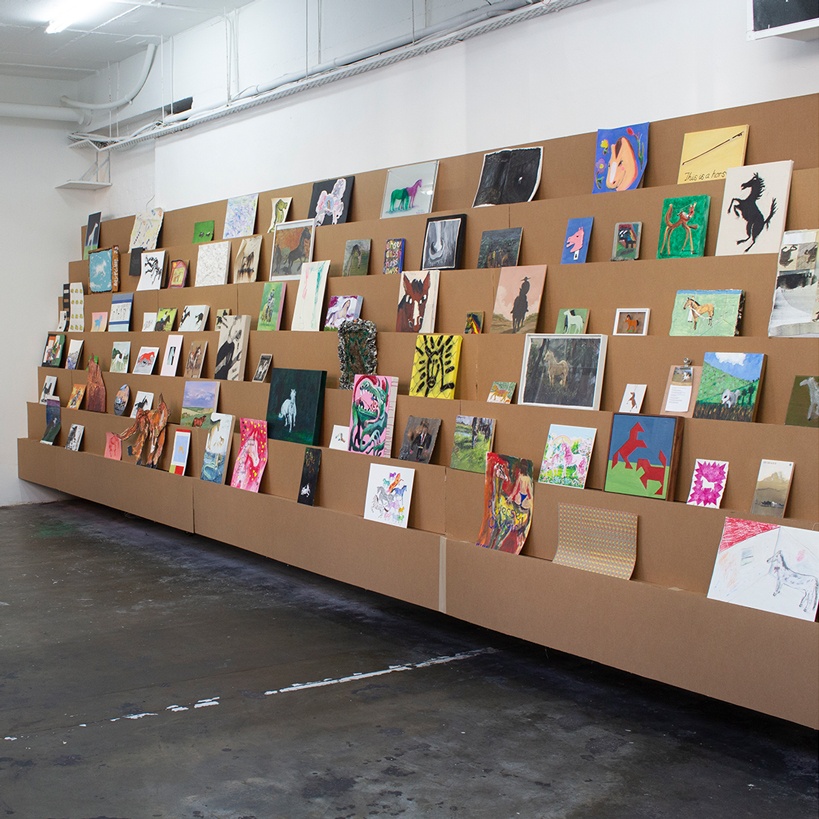
This shift towards participatory practice is visible in the work of Parking Gallery and Keleketla! in Johannesburg, and was a key modality at Under Projects. Some of Under’s most memorable exhibitions were initiated by an open call with a set of parameters which encouraged varied interpretations. In Paintings of Horses, artists “were encouraged to capture the essence of a horse, to think through the form of a horse, to query what a horse is or isn’t, and to reveal the potentialities of what a horse can be,” through a call shared on Instagram8. The prompts for Sculptures of Cars and Toolbox were similarly open-ended. Through the multiplicity and the banality of the objects, Under effected a kind of dematerialisation, diluting the potency of the exalted art object. The open-call exhibitions also demonstrated the art world’s move from understanding artists as solitary geniuses, to seeing them as just a small part of broader communities and social structures. It reminded me of art before modernism, in which artists were largely limited to a set of themes, particularly in the religious paintings of the Renaissance, through which artists were able to integrate personal expression into their variations of scenes, such as the Crucifixion and the Ascension. It also recalled the camaraderie of art school, when a class is tackling the same assignment. Much of the beauty of Under’s open-call shows happened in the conversations which they invoked: the shared anxieties of navigating a lack of knowledge about horse anatomy or how to create a structurally sound sculpture for the first time. And then, during the show, the appreciation of the ingenuity of other artists in their approach to the prompt, and the attempts at matching the style expressed by a work with its maker. The sense of artistic community in Cape Town had been disrupted by the pandemic, and Under did much to revive it. The objects became overshadowed by the connections that produced them – they were often barely visible because each of the many exhibiting artists had invited friends and family to support the projects. Despite the large number of objects in these shows, the idea was the ‘thing’, making them valid – at least to me – as a form of conceptual, socially engaged art.
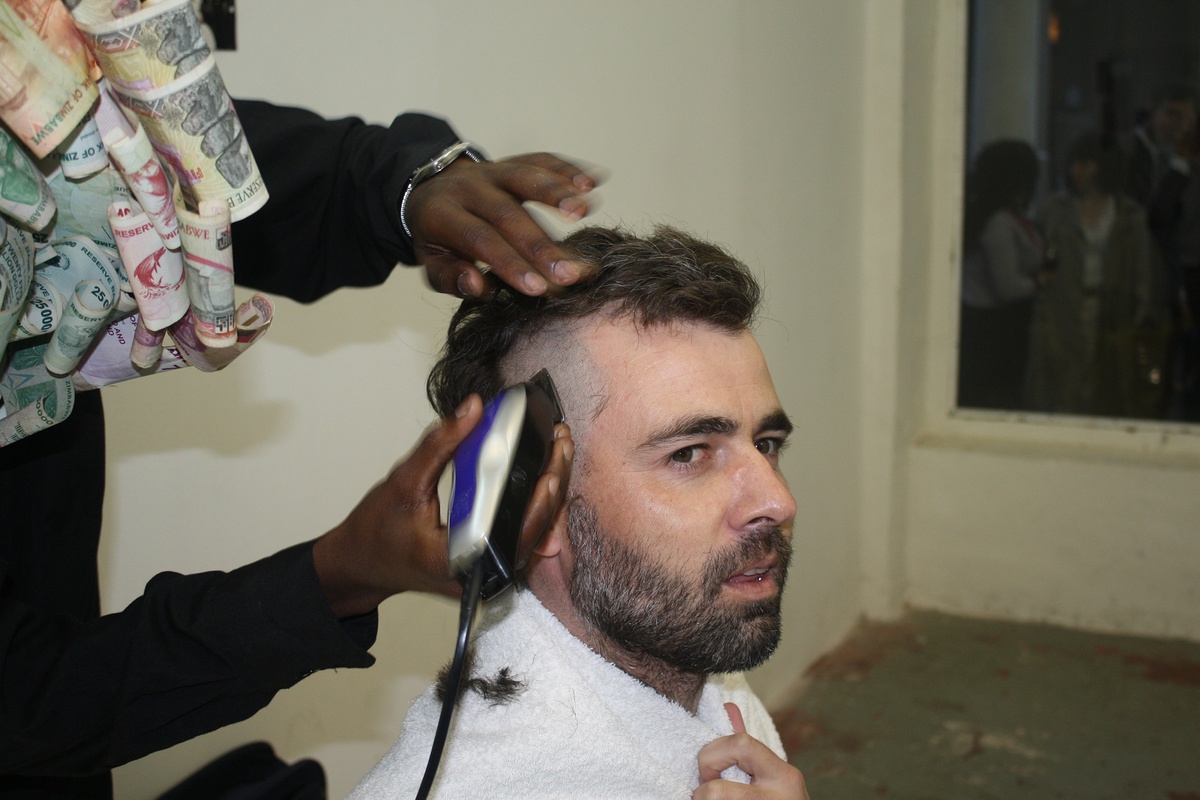
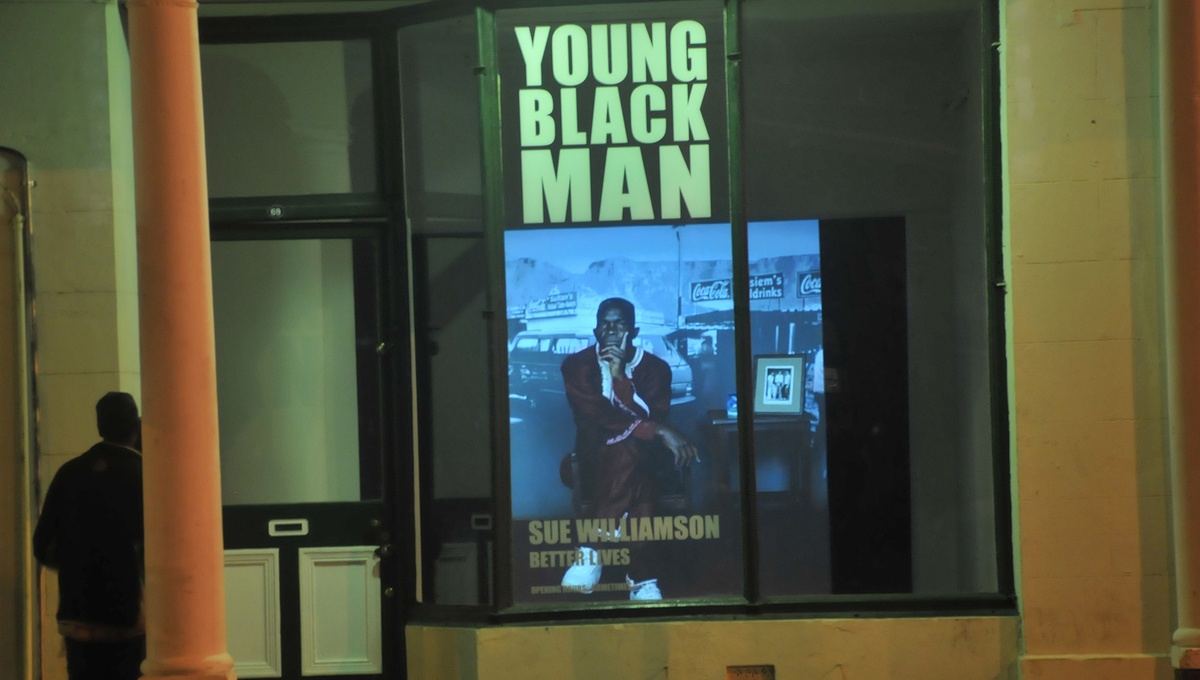
Though YOUNG BLACKMAN focused on conceptual practices that were more minimal and less participatory, they did exhibit a project by Gerald Machona in November 2010. In a performance by Machona, Ndiri bhaba (I am a barber), he covered his face with a headdress made of Zimbabwean banknotes and shaved the hair of visitors. Machona described the work as an exploration of “an occupation which is popularly performed by immigrants”, including the many over-qualified Zimbabwean immigrants who left their homeland due to economic and political crisis. For the first time, YOUNG BLACKMAN’s mainly middle-class direct audience experienced the act of having one’s hair done in public, as many working-class South Africans do near minibus taxi ranks throughout the country. However, one of the most notable ways that YOUNG BLACKMAN connected with audiences was through its proximity and openness to the street. Formerly a retail space, its expansive windows allowed passersby to peer inside – a characteristic utilised by many of the exhibitions. Sue Williamson’s video installation, Better Lives (2003), is a key example. The work is a series of interviews and video portraits of people who have fled to Cape Town to escape poverty and war in their home countries. Williamson’s backdrops refer to the rich history of studio portraiture in Africa, similarly cited in Santu Mofokeng’s The Black Photo Album (1997) and Terry Kurgan’s Park Pictures (2004). Rather than relying on static photographic depictions, she includes audio of each sitter recounting their experiences in their own words, attempting to address concerns related to intra-African migration: “How is life for the newcomers? Do they find the stability they seek, or do job difficulties and xenophobia make them long for their old home?”9 YOUNG BLACKMAN did not have a strong enough projector to have the work visible during the day without blocking the windows. Rather than sacrificing the view of the video from the street, they leaned into the work’s limited visibility as noted in the exhibition text: “The large-scale video projections will be on view from the street only after dark daily – the video projection at the back of the space picks up too much light during daytime hours, though the recorded voices can be heard at all times.”10 Ed Young remembers sitting across the street outside the Kimberley Hotel late at night into the early morning, watching people stop to view the video. This exhibition strategy feels attuned to its subject matter, the marginalisation of migrant workers in South Africa.
Conclusion
Self-governance requires collective action combined with knowledge and will on the one hand, and supporting and consistent institutional arrangements on the other hand.
Knowledge is cumulative. With ideas the cumulative effect is a public good, so long as people have access to the vast storehouse.
– Hess and Ostrom (2006)11
Coming to the close of this series of texts, the above excerpts from Hess and Ostrom’s writing on knowledge as commons point to two defining issues as we consider the impact, mechanisms, and potential of project spaces. Looking to project spaces in Europe and the US, with the high level of support they receive through subsidies and grants from both private and public sectors as well as from their expansive artistic communities, it is clear that emerging practitioners in the South African context lack the “supporting and consistent institutional arrangements” which act as substrate for a diverse field of independent spaces. At any given moment, there are only a handful of projects significantly contributing to the conversation of experimental artistic practice. Within the time period from the 1990s to the present day discussed in these essays, there have been lulls – moments when it feels nothing much is happening outside of commercial galleries. In Cape Town, particularly in the time after YOUNG BLACKMAN (2010) and before Under Projects (2022), there were few experimental spaces and most independent exhibitions were ‘one night only’ pop-up shows. Speaking for myself and my friends/co-organisers of this kind of exhibition, we were limited by a lack of financial resources and time between our day jobs as well as the unaffordable rents in Cape Town’s city centre. During this time, Ed Young often expressed his frustration at our inability to make something longer lasting (or our lack of willingness to take greater risks), especially because people were often asking, “when will YOUNG BLACKMAN come back?”. However, one of artists’ best qualities is their ability to use ingenuity to navigate seemingly unsurpassable obstacles. Though it is important to continue to advocate for the real needs of the creative industries, the government’s general lack of interest in non-profit artistic endeavours is largely out of the hands of emerging artists. Similarly, greater support from commercial galleries would be valuable but can only go so far without overly influencing the central role of project spaces as platforms for experimentation where failure is allowed to occur. Despite the inaccessibility of crucial financial resources, the pool of ideas and knowledge is expansive and increasingly unhindered by national borders. Sharing the experience accumulated by past project spaces gives emerging practitioners a foundation to build upon, instead of each new project space having to begin from scratch. If less time is spent navigating the logistical challenges which characterise the landscape, project spaces will have more time and capacity to innovate within the realm of ideas. Having a sense of a roadmap may also make the prospect of creating one’s own space less daunting. In order to expand and open up the ‘storehouse’, there needs to be more comprehensive archives and more frequent cross-generational discussions.
Despite being four parts, this series of essays is limited in its case studies. There are many more South African project spaces which contributed to the current state of contemporary art, which I did not have enough information and archival material about to discuss deeply. The hope is that these essays can function as a call to action for practitioners to save and share ephemera, painting a more thorough picture for emerging practitioners to take inspiration from.