Introduction
Project spaces are usually spontaneous collaborations between friends. These partnerships occur organically, and this is reflected in the distribution of responsibilities and duties among co-founders. This can be advantageous. Werner Vermeulen recalls the process of running FIG:
We did it and there was no planning and no cataloguing. Things were just thrown together, it was a spur-of-the-moment thing. There was excitement, and this conversation and everyone was buzzing. “Yeah, we’re gonna do it” and you just do it. There was no business plan or anything like that, no thought of how we were going to maintain the building.
According to Siemon Allen, FLAT operated in a similar manner:
It was a dynamic, crazy time in South African history, and we felt like anything was possible. “Yeah we're gonna have a gallery! We’re going to have an exhibition every week, or we'll have an exhibition on Wednesday and then one on Friday!” We were very idealistic.
One of the initial interests which drove my research was understanding how project spaces are organised, and how their processes could be improved upon to extend longevity. This interest was largely influenced by Charlotte Hess and Elinor Ostrom’s book, Understanding Knowledge as Commons (2007). I explored their ideas within Common (2023), looking at case studies of organisational models from both inside and outside of the art world. During the exhibition’s run, we held a roundtable discussion in which past and present project space co-founders shared their experiences. Through the roundtable, as well as research interviews, it became clear that the informality of their operating structures had often caused conflict amongst organisers. However, these conversations also destabilised the research’s initiating question. Is longevity actually desirable? Or are spontaneity and a short lifespan a crucial part of what differentiates project spaces from the rest of the art world?
The Commons
In general, the term “Commons” applies to any shared resource in which individual property rights do not apply. A particular commons can be as small as a family refrigerator and as extensive as the Internet. The main objective of the scholarly study of the Commons is to consider how varying organisational models can improve equitable access, efficient usage, and sustainability of resource pools. Though project spaces are usually begun by particular individuals, they thrive when they have the support and confidence of the communities that they serve. Rather than operating based on financial capital (because they are not profit-making organisations), they rely on social capital. Ostrom identifies a general set of design principles necessary for a well-run commons1. Here is a summary of the most relevant principles:
- Clearly defined boundaries, with rules well-matched to the community’s needs and conditions.
- The ability of individuals affected by these rules to participate in modifying them.
- An established system for self-monitoring members’ behaviour, and a graduated system of sanctions available so that there are consequences for crossing the defined boundaries.
- Access to low-cost conflict resolution mechanisms.
- A clear division of labour.
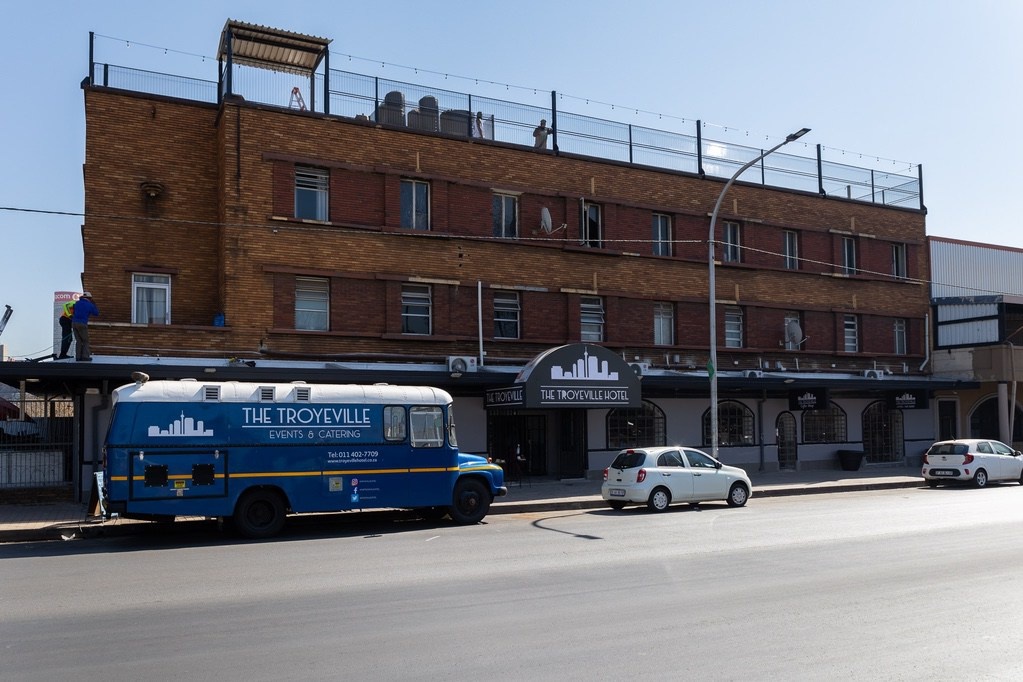
Though some of these guidelines may seem overly complex or restrictive for a project space, they offer topics of conversation to be discussed by organisers as they initiate projects. Some of these concerns are likely discussed organically – Vermeulen referred to the Troyeville Hotel’s bar as FIG’s “conference room”, a place for shared decision-making and “low-cost conflict resolution”. These principles can also be reformulated in more direct terms, for example: How are decisions which affect the collective made? (Under Projects made use of Google polls and invited external panel members to weigh in). How are responsibilities and administrative tasks, such as designing posters, writing exhibition texts, or managing the bar at openings, equitably divided? If a co-organiser no longer has the ability to contribute as meaningfully as they had initially planned, how can that be addressed within the group?
In my anecdotal experience, these concerns are discussed as issues arise rather than at the outset of the project. Without clear parameters and a platform for each collaborator to feel heard, there is the risk of misunderstanding and conflict. Though Juliana Irene Smith highlighted that the joy of working directly with artists overrode any organisational conflicts, she also asserted that, “There is always going to be one person who does most of the work. That doesn’t really bother me much, I would rather just do it than argue about it – which unfortunately still happened on occasion.” Broadly speaking, it is worth wondering if this kind of conflict could be mitigated by a preconceived and shared understanding that each part of the collective will take turns at being the “person who does most of the work”. Though applying the guidelines set out by Ostrom may appear to be an act of overthinking given the informal nature of project spaces, the transition from friend to collaborator can often be more uneasy than anticipated. If disagreement is an inevitable part of collaboration, perhaps it is necessary to plan for it.
Longevity
In my conversations with project space co-founders, no one had initiated their projects with a finite timeline in mind, beyond running them “as long as possible”. Many have expressed regret that they couldn’t keep them active for longer. Smith said that she would have applied for continued funding but a burglary of Alma Martha’s Woodstock space and the desire to have children resulted in her moving on to other endeavours. Ed Young and Matthew Blackman had drafted a funding proposal for YOUNG BLACKMAN but found that no potential backers were interested in supporting a cultural nonprofit2. Vermeulen said that FIG closed partly because Troyeville was becoming increasingly unsafe and intimidating to gallery goers.
Because of the greater accessibility of public funding and private patronage, project spaces are generally easier to sustain in high-income countries. As detailed in the first essay of this series, one of the main objectives of project spaces is to platform artistic practice which is marginalised within mainstream spaces like museums and commercial galleries. Longer-running project spaces such as Vienna’s Secession, founded at the end of the nineteenth century by Gustav Klimt and his compatriots, and Auto Italia in London, founded in 2007 by artists Kate Cooper, Amanda Dennis and Rachel Pimm, continue to focus on emerging contemporary art. Both spaces are critically acclaimed and have remained non-profits, but their longevity has resulted in their having the status and responsibilities of institutions rather than light-footed spaces for experimentation. Experimentation implies an openness to failure, which is seemingly made more difficult when a project involves large capital investment and the sense that an exhibition is ‘make or break’ for an artist’s career.
Though Blackman has said of YOUNG BLACKMAN’s end that it felt like a break-up at the end of a romantic relationship, Young has taken a more ambivalent stance:
Projects happen and then go away, happen and then go away. That is fine, as long as they keep on happening. If they want to become stable and continue, they grow into something else and take on another role in the art world. It is sad when projects end but they are probably at their most interesting when they first begin.
The longer-running community art projects founded in South Africa – such as Market Photo Workshop and Bag Factory – turned to formalised organisational structures in order to promote longevity, deploying administrative staff and rotating boards of trustees. Though this model has meant that they have been able to serve as a platform for hundreds of emerging artists, it is difficult to imagine that trustees would approve of an exhibiting artist destroying the floor of the exhibition space (YOUNG BLACKMAN), or ‘faking’ a show by an established artist without their permission (FLAT). With the financial support of the government or private patrons, the stakes are higher. Though project spaces can become sustainable, fully-fledged arts organisations showing interesting contemporary art, the risk-taking energy of a group of young artists in a rented space trying to one-up and shock their immediate circle will likely not be sustained along with it.
Archival practices
Returning to the idea of the commons, scholars in the field make an important distinction between ‘subtractive’ and ‘non-subtractive’ resource pools. Most forms of commons are subtractive – as people make use of these resources there is less to go around, and they therefore rely upon barriers to access in order to secure their sustainability. This applies to natural resources such as forestry and fishery. What separates knowledge and culture from other forms of commons, as stated by Hess and Ostrom, is that they are ‘non-subtractive’, making barriers to entry unnecessary to their sustainability. Further, access to knowledge generates the production of more knowledge. This is the basis of public education and libraries, as well as websites created by Internet open-access activists, such as Wikipedia and (at least initially) Reddit. Note that this is in reference to the maintenance and expansion of pools of knowledge, not the ability of knowledge pools to be profit-making entities. Returning to Young’s assertion that the end of project spaces is fine “as long as they keep on happening”, the idea of longevity opens up within this lens. How can the spirit of collaboration and risk-taking be retained amongst emerging artists?
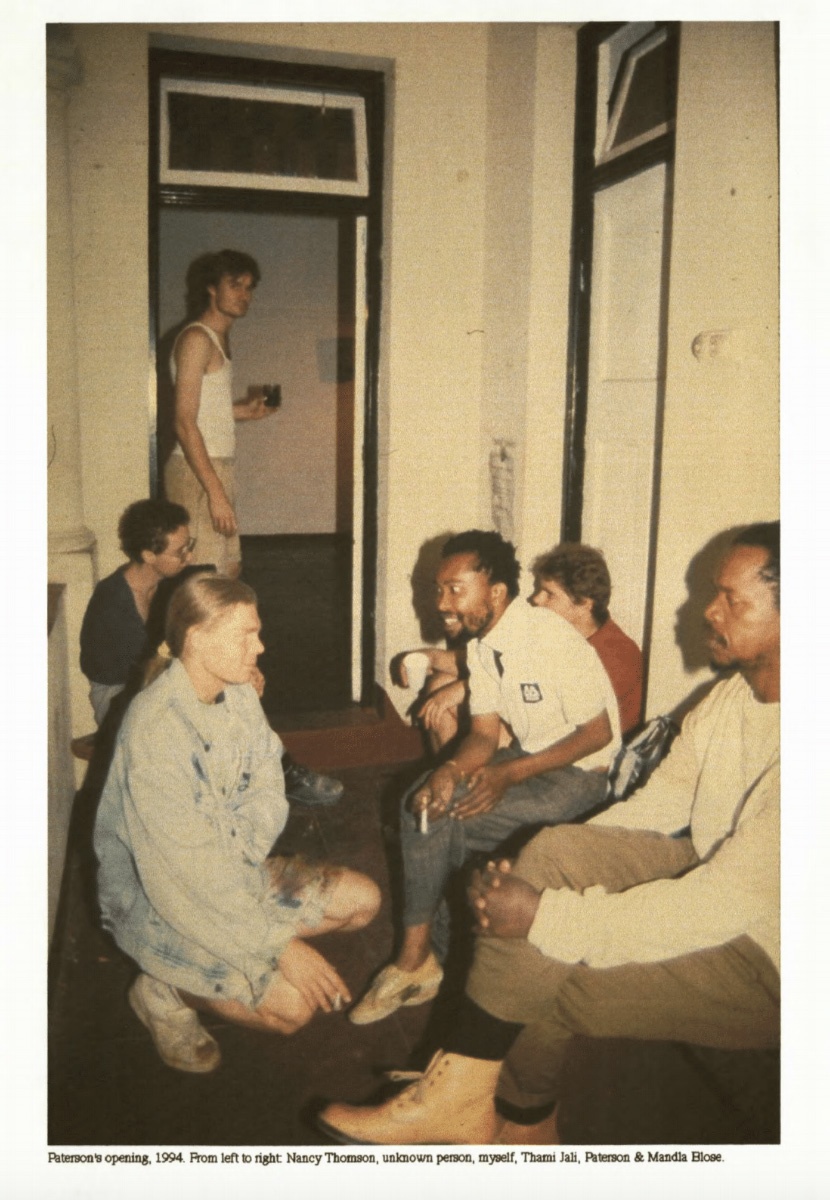
Archiving cultural histories, including the histories of artistic and curatorial practice, is broadly understood to be generative. As observed by sociologist Howard Becker, innovation is possible in art because of a collective understanding of artistic conventions or tradition. Convention enables artists to standardise some processes so that they have the capacity to prioritise the other aspects of their practice that they care about most. Each new painter doesn’t have to reconceptualise their materials from scratch (if they don’t want to), because paint and stretched canvases are conventions of the medium. The history of project spaces in South Africa is mostly shared through oral retelling, but for those emerging artists who do not have direct access to the previous generation of practitioners, it can often appear that they are beginning from scratch. One of the key ways in which project organisers can give their work longevity is through their archive. Despite writing an entire book about the history of the FLAT, Allen regrets that their processes were under-recorded.
The sad thing for me is that there is so much that remains undocumented, like all the major performances that took place at the FLAT. We only really have the paper detritus from them…like a flyer, or poem, or a menu. But we don't actually have images of the performances, and some of them were pretty spectacular.
Vermeulen had a similar sentiment about FIG: “There’s a lot of amazing artworks from the ‘90s that are lost for life. Works that were so prominent at the time and now there’s absolutely no record of them.” He noted that one of the things he admires most about the current generation of artists is their increased capacity to keep an archive.
Conclusion
When the archive of work produced by project spaces is not easily accessible – beyond the anecdotes of the people who experienced them at the time – they cannot be fully integrated into the artistic ‘conventions’, as defined by Becker, even if they were successful in their time. In a conversation with the co-organisers of a project space who had entered the art world after studying other fields in university, they expressed that they felt daunted by the sense that they were creating something entirely new, unaware that spaces like theirs had existed in the country before them. The gap of time between their space and YOUNG BLACKMAN was just ten years. This series of essays is a gesture towards making the ideas and methodologies of South African project spaces available to emerging artists with the hope that doing so will support further innovation. Even so, the burden lies almost entirely on project spaces to record their processes as they occur. Of course, the act of documenting and self-publishing one’s own work is far more streamlined and affordable now than it was in the ‘90s, but it is still necessary to consider where and how one’s archive is being housed. If a social media platform deleted your entire profile, would you still have access to all of the content that you created and uploaded? Additionally, social media often imposes a level of censorship which does not always suit the boundary-pushing nature of experimental art. Beyond the technological concerns, archiving requires mindful storytelling; the ability to convey the ethos and energy driving a space through exhibitions and the ephemera which surround them.
In the fourth and final essay, I will explore how project spaces in South Africa have communicated with their audiences through their aesthetic choices via close readings of exhibition texts and installation images from their archives.